Discover the 1978 Ford F150 — a timeless classic truck loved for its power, durability, and vintage appeal. Learn about its history, design, performance, restoration tips, and why it still reigns supreme among collectors.
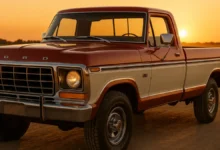
The 1978 Ford F150 is more than just a vehicle — it’s a piece of automotive history that shaped the way people think about pickup trucks. Known for its rugged reliability, handsome design, and straightforward engineering, this truck became a symbol of American toughness. Decades later, the 1978 Ford F150 still commands admiration from collectors, restorers, and everyday drivers alike.
When Ford introduced the F150 in the late 1970s, it wasn’t just trying to sell another pickup — it was responding to changing customer needs. Drivers wanted more capability, comfort, and versatility in their trucks, and the 1978 Ford F150 delivered exactly that. Today, it represents a perfect blend of durability, simplicity, and charm — qualities modern vehicles often lack.
Let’s dive deep into what makes the 1978 Ford F150 such a beloved machine — from its background and design to its performance, restoration potential, and lasting legacy.
The Origins and Legacy of the 1978 Ford F150
To appreciate the 1978 Ford F150, it’s important to understand where it came from. The F-Series had already been around for decades, but the late 1970s brought a wave of change. The oil crisis and shifting consumer expectations pushed automakers to rethink what trucks could be. Ford saw an opportunity to create a vehicle that was both strong enough for work and refined enough for daily driving.
The 1978 Ford F150 was part of the sixth generation of F-Series trucks, which ran from 1973 to 1979. This generation introduced stronger frames, wider bodies, and better suspension systems — all improvements designed to make the trucks more capable and comfortable. By 1978, Ford had fine-tuned its design, resulting in one of the most balanced and attractive models in the F-Series lineup.
Another reason the 1978 Ford F150 became iconic is its role in American culture. This was the truck that farmers, tradesmen, and everyday families relied on. It wasn’t flashy, but it was trustworthy. It represented a time when vehicles were built to last, not just to look good on a showroom floor.
The F150 name itself had only been around for a few years by 1978. Ford introduced the model in 1975 as a bridge between the lighter F100 and the heavier F250. The F150 quickly became a fan favorite thanks to its perfect balance between payload capacity and everyday usability.
Design and Styling: A Look That Defined an Era
The 1978 Ford F150’s design perfectly captured the spirit of the late 1970s — bold, boxy, and built to make a statement. It was the last of the classic square-bodied F-Series before Ford moved to a more aerodynamic style in the following generation. That makes the 1978 model especially appealing to collectors who love its tough, old-school aesthetic.
From the front, the 1978 Ford F150 featured a large, commanding grille and dual headlights that gave it a distinct, confident face. Chrome bumpers and trim added a touch of sophistication, while the steel body panels conveyed strength and durability. The truck had a certain honesty to its design — no unnecessary curves or gimmicks, just solid craftsmanship.
Inside, the cabin was functional but surprisingly comfortable for its time. Ford offered a range of trims, from the basic Custom model to the more luxurious Ranger XLT and the newly introduced Lariat package. Higher trims came with better upholstery, carpeted floors, and woodgrain accents on the dash. For many owners, these touches made the 1978 Ford F150 feel more like a car than a work truck.
Color options were plentiful, too. Ford offered bold two-tone paint schemes that gave the 1978 Ford F150 even more character. Whether you preferred bright red, deep blue, or earthy brown, there was a version that fit every personality.
Engine and Performance: Power You Can Feel
When it comes to performance, the 1978 Ford F150 offered a satisfying mix of power and dependability. Ford understood that its customers wanted choice, so it provided several engine options to suit different needs. The standard setup included a 300-cubic-inch inline-six engine known for its legendary durability. It wasn’t the fastest, but it could take a beating and keep running for decades.
For those who craved more muscle, the 1978 Ford F150 could be equipped with a range of V8 engines, including the 351M, 400M, and the big-block 460. These engines delivered the torque and grunt needed to handle heavy loads, tow trailers, and conquer tough terrain. The throaty rumble of a 1978 Ford F150 V8 is music to any classic truck enthusiast’s ears.
Transmission choices included a three-speed manual, a four-speed manual, or an optional automatic. The combination of a torquey engine and durable gearbox made the truck feel confident whether hauling hay bales or cruising down the highway.
The suspension was built tough, using twin I-beam front suspension and sturdy leaf springs in the rear. This design gave the 1978 Ford F150 its signature ride — firm but capable of soaking up the rough stuff. It was a true workhorse, made to handle dirt roads, construction sites, and anything else you threw its way.
Fuel economy wasn’t the truck’s strong suit, but that was never its purpose. The 1978 Ford F150 was about strength, not saving fuel. It was built to work hard, and that’s exactly what it did.
Trims and Options: The Right F150 for Every Driver
Ford knew that not all truck buyers were the same. Some needed a bare-bones work truck, while others wanted a comfortable cruiser with extra flair. The 1978 Ford F150 lineup reflected this understanding, offering a variety of trims and options to suit every kind of owner.
The base model, called the Custom, was simple and functional. It featured vinyl seats, basic instrumentation, and minimal chrome. It was perfect for farmers, contractors, and anyone who needed a truck that could take abuse and keep going.
Next up was the Ranger, which added a touch of refinement. It included upgraded materials, improved sound insulation, and more decorative trim. The Ranger XLT took things a step further with additional chrome details, plush interior materials, and stylish two-tone paint schemes.
Then there was the Lariat — a trim introduced in 1978 that brought true luxury to the F-Series for the first time. The 1978 Ford F150 Lariat featured a more upscale interior, additional insulation for a quieter ride, and comfort features that were ahead of their time for a pickup.
Buyers could also choose between two-wheel drive and four-wheel drive, as well as two main bed styles: the Styleside (smooth-sided) and Flareside (with exposed fenders). This flexibility made it easy to find a 1978 Ford F150 that fit your exact needs.
Driving Experience: Tough, Honest, and Real
Driving a 1978 Ford F150 is an experience that transports you back to a simpler time. There are no screens, no complicated electronics — just pure mechanical connection between driver and machine. It’s the kind of truck that reminds you what driving is supposed to feel like.
Behind the wheel, the 1978 Ford F150 feels substantial. The steering is heavy but direct, the suspension firm but stable, and the engine delivers that deep, throaty growl that makes you feel in command. Every gear change, every rumble of the exhaust, adds to the sense that you’re driving something built from steel and determination.
Despite its age, the 1978 Ford F150 remains surprisingly usable. It’s large but manageable, comfortable enough for long trips, and sturdy enough to handle serious work. Of course, it doesn’t handle like a modern truck, but that’s part of its charm — it feels alive.
Owners often describe driving a 1978 Ford F150 as therapeutic. There’s something deeply satisfying about feeling the engine’s vibrations through the steering wheel and hearing the mechanical symphony of pistons, gears, and valves doing their thing.
If you’re lucky enough to drive a well-restored example, you’ll notice how timeless it feels. The truck might be over forty years old, but its simplicity makes it oddly modern — it just works.
Ownership and Maintenance: Built to Last
One of the biggest reasons people love the 1978 Ford F150 is its longevity. These trucks were built with thick steel, strong frames, and engines designed to run forever with basic care. Many examples on the road today are still running on their original drivetrains.
Owning a 1978 Ford F150 is relatively straightforward compared to newer trucks filled with electronics. Maintenance involves simple mechanical work — oil changes, tune-ups, and keeping an eye on rust. Parts availability is excellent thanks to the huge popularity of the F-Series, and there’s an active community of enthusiasts who share tips and resources.
That said, rust is the biggest enemy of any old Ford truck. Areas to check include the cab corners, floor pans, and wheel arches. Catching and repairing rust early can save thousands of dollars later.
Fuel economy is another consideration. Even in its most efficient setup, the 1978 Ford F150 is thirsty by modern standards. But for most owners, the joy of driving such an iconic truck far outweighs the cost at the pump.
With proper care, a 1978 Ford F150 can easily last for generations. It’s not unusual to see these trucks still performing daily tasks or being used as reliable weekend haulers.
Restoration and Modification: Bringing a Legend Back to Life
Restoring a 1978 Ford F150 can be one of the most rewarding automotive projects out there. Whether you’re aiming for a factory-original restoration or a custom build, the platform gives you endless possibilities.
A factory-style restoration focuses on bringing the truck back to its original appearance and specifications. This means using period-correct paint colors, trim pieces, and interior materials. The result is a truck that looks like it just rolled off the showroom floor in 1978.
On the other hand, many owners choose to modify their 1978 Ford F150 for improved performance or modern comfort. Common upgrades include engine swaps, disc brake conversions, modern suspension kits, and upgraded interiors. The key is balance — preserving the truck’s vintage charm while improving drivability.
If you’re planning a restoration, it’s important to start with a solid body and frame. Mechanical parts are easy to replace, but extensive rust repair can get expensive fast. Once the foundation is strong, you can focus on aesthetics and performance.
Restoring a 1978 Ford F150 isn’t just about bringing back an old vehicle — it’s about preserving history. Each truck tells a story, and giving it a new lease on life keeps that story going.
Why the 1978 Ford F150 Still Matters Today
In a world filled with high-tech trucks boasting touchscreen displays and turbocharged engines, the 1978 Ford F150 stands as a refreshing reminder of what trucks used to be. It represents authenticity — a machine designed to work hard, not just to impress.
For collectors, it offers excellent value. It’s old enough to be a classic but still practical enough to drive regularly. For restorers, it’s a dream — simple mechanics, abundant parts, and endless customization potential. And for enthusiasts, it’s a tangible connection to a golden era of American automotive design.
The 1978 Ford F150 also serves as a cultural icon. You’ll see it in movies, country songs, and vintage photographs — a symbol of honesty, reliability, and craftsmanship. It’s a truck that doesn’t pretend to be something it’s not. It’s proud of its roots, and that’s exactly why people love it.
Simply put, the 1978 Ford F150 matters because it reminds us that great design doesn’t fade — it endures.
Specifications Table: 1978 Ford F150
| Feature | Details |
|---|---|
| Model Year | 1978 |
| Generation | Sixth (1973–1979) |
| Engine Options | 300 Inline-6, 351M V8, 400 V8, 460 V8 |
| Transmission Options | 3-speed manual, 4-speed manual, automatic |
| Drivetrain | 2WD or 4WD |
| Bed Styles | Styleside and Flareside |
| Trims Available | Custom, Ranger, Ranger XLT, Lariat |
| Suspension | Twin I-Beam (front), leaf springs (rear) |
| Body Construction | Heavy-duty steel frame |
| Curb Weight | Around 4,000–4,800 lbs (depending on setup) |
Quotes from Enthusiasts
“The 1978 Ford F150 is the definition of timeless — built to work, built to last, and built with soul.”
“Driving a 1978 Ford F150 reminds you that simplicity and strength never go out of style.”
“Every nut and bolt in this truck tells a story. It’s more than a vehicle — it’s a legacy.”
Frequently Asked Questions (FAQs)
Q1: Is the 1978 Ford F150 reliable?
Yes. The 1978 Ford F150 is considered one of the most reliable classic trucks ever made. With regular maintenance, it can last for decades, thanks to its simple mechanical design and robust engine options.
Q2: What engine came standard in the 1978 Ford F150?
The base engine was the 300-cubic-inch inline-six, known for its durability. Optional engines included the 351M, 400, and 460 V8s for more power and towing capability.
Q3: Is it hard to find parts for a 1978 Ford F150?
Not at all. Because of the truck’s popularity, parts are widely available both new and used. Everything from mechanical components to trim pieces can be sourced from restoration suppliers and enthusiast communities.
Q4: How much does a restored 1978 Ford F150 cost?
Prices vary widely depending on condition and originality. A well-maintained example can cost between $15,000 and $35,000, while fully restored show-quality models can fetch even more.
Q5: Is the 1978 Ford F150 fuel-efficient?
No, not by today’s standards. Expect around 10–14 miles per gallon, depending on the engine. However, most owners value the truck’s strength and charm far more than its fuel economy.
Q6: What makes the 1978 Ford F150 special compared to other years?
The 1978 model featured design refinements and new trim options like the Lariat. It also represents the end of the classic square-body era, making it one of the most collectible F-Series models.
Q7: Can the 1978 Ford F150 be used daily?
Yes, but with realistic expectations. It lacks modern comfort features and safety tech, but its reliability and simplicity make it a capable daily driver for those who appreciate vintage trucks.
Conclusion
The 1978 Ford F150 is more than a truck — it’s a statement of strength, heritage, and craftsmanship. It embodies an era when vehicles were built to endure and designed with purpose. From its timeless design and powerful engines to its simple mechanics and legendary reliability, the 1978 Ford F150 continues to inspire admiration from enthusiasts around the world.
Whether you’re restoring one, driving one, or just admiring it from afar, the 1978 Ford F150 remains a symbol of authenticity in an age of complexity. It’s not just a classic — it’s a cornerstone of American automotive history.