If you’re panicking and thinking, “my crown came off,” don’t worry — here’s what to do immediately, why it happens, how your dentist can fix it, and expert prevention tips explained in simple, clear language.


Hearing or feeling your dental crown pop off can instantly trigger panic. One moment your tooth feels perfectly fine, and the next, you’re holding a small cap in your hand thinking, “My crown came off — what do I do now?”
It’s a moment that feels serious, but here’s the truth: while it needs attention, it’s rarely a disaster. Crowns can come loose or fall off for many reasons — from old adhesive to biting something hard — and almost every case is fixable. The key lies in how calmly and quickly you act after it happens.
In this detailed expert guide, we’ll cover everything — from why crowns fall off to the exact steps to take when it happens, how dentists fix them, and how you can prevent future issues. This is your all-in-one roadmap to handle “my crown came off” confidently.
Understanding Dental Crowns and Why They Fall Off
Before diving into what to do, it’s important to understand what a dental crown is and why it might loosen or fall off in the first place.
A dental crown — often called a “cap” — is a custom-made covering that fits over a tooth to restore its strength, shape, and appearance. Crowns are usually placed after procedures like large fillings, fractures, or root canals. They act as armor for your natural tooth, shielding it from damage.
However, even armor can fail over time. Crowns rely on two critical things: the health of the underlying tooth and the strength of the dental cement holding it. If either of these weakens, your crown can detach.
Common Reasons a Crown Comes Off
- Cement Failure:
Dental cement is strong but not eternal. Over years of chewing, brushing, and exposure to temperature changes, it can erode. Once the seal breaks, bacteria and saliva sneak in, loosening the bond until — pop — your crown comes off. - Decay Underneath the Crown:
The tooth beneath a crown isn’t immune to decay. If bacteria get between the crown and the tooth, decay can destroy the foundation, weakening the support structure. - Improper Fit or Design:
If the crown wasn’t perfectly fitted or shaped, it might have micro-gaps or uneven pressure points. These small imperfections add up over time, causing gradual loosening. - Chewing Hard or Sticky Foods:
Sticky candies, hard nuts, or ice can pull or stress your crown, sometimes dislodging it instantly. - Teeth Grinding (Bruxism):
Chronic grinding or clenching places immense pressure on crowns. The constant micro-movements weaken cement bonds and cause loosening. - Tooth Structure Loss:
If too much of the original tooth was removed or compromised, there might not be enough structure to grip the crown properly. - Natural Wear and Aging:
Just like anything in your mouth — fillings, enamel, or bone — crowns wear down. After a decade or more, even a well-made crown can start to loosen.
When your crown finally gives out, the root cause is often a combination of these factors.
My Crown Came Off — What You Should Do Right Away
When you first realize your crown came off, resist the urge to panic. This situation is common, and you can handle it safely until your dentist re-cements or replaces it.
Step One: Retrieve the Crown and Keep It Safe
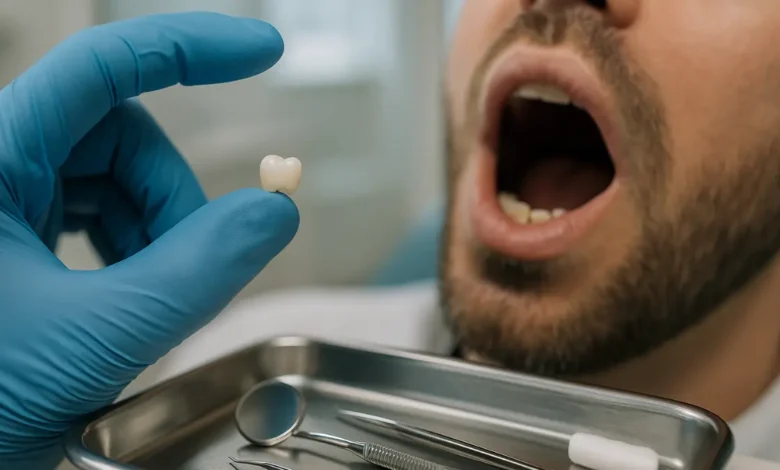
If possible, find the crown immediately. Sometimes it falls out while eating or brushing. Pick it up, rinse it gently under lukewarm water, and place it in a clean container or zip-lock bag.
Do not try to scrub the inside — that surface might still have bits of cement your dentist will need to inspect.
If you accidentally swallowed the crown, don’t worry — most dental crowns are made from non-toxic materials and will pass naturally. But you’ll likely need a replacement.
Step Two: Inspect the Tooth
Look at the exposed tooth in the mirror. You may see a stub (the prepared tooth) or a post if you had a root canal. It might feel sensitive to air, touch, or temperature — that’s normal.
Avoid touching it with fingers or tools. The exposed surface is fragile and easily irritated.
Step Three: Protect the Exposed Tooth
Until you see your dentist, protect that vulnerable tooth from pain and infection. You can do the following:
- Rinse gently with warm salt water to keep the area clean.
- Avoid eating on that side. Stick to soft foods like yogurt, rice, or soup.
- Brush gently, avoiding direct pressure on the exposed tooth.
- If available, you can use temporary dental cement from a pharmacy. Apply a small amount inside the crown and gently press it onto your tooth. Do not force it or bite down hard.
Never use super glue or household adhesives. These can burn tissues, poison your mouth, and make dental repair harder.
Step Four: Call Your Dentist
Let your dentist know your crown came off. Explain whether you have the crown and if you’re feeling any pain. Most dental offices will schedule an urgent visit within a few days — sooner if you have discomfort or visible damage.
What Happens at the Dentist After Your Crown Came Off
When you get to the dental office, your dentist will carefully examine both your crown and the tooth it covered. The next steps depend on what they find.
Re-Cementing the Crown
If the crown is in good shape and the underlying tooth is healthy, your dentist may simply clean everything and re-cement it. This is the quickest and most affordable fix.
The process involves:
- Cleaning old cement from both surfaces.
- Treating minor decay if present.
- Applying fresh dental adhesive.
- Positioning the crown precisely and letting it set.
Afterward, your dentist will check your bite to ensure perfect alignment.
Repairing or Replacing the Crown
If the crown is cracked, warped, or poorly fitting, or if the underlying tooth has decayed, you may need a new one.
In that case:
- The dentist reshapes or rebuilds the tooth using filling material or a post-and-core.
- A new impression or 3D scan is taken to fabricate a replacement crown.
- A temporary crown is placed to protect your tooth until the permanent one is ready.
When the new crown arrives, it’s fitted and cemented permanently — usually restoring both function and aesthetics.
Treating Underlying Problems
Sometimes a loose crown is a symptom, not the cause. If decay, gum disease, or trauma is the root issue, your dentist will treat those first. In rare cases, if the tooth is too damaged to hold a crown again, an implant or bridge may be considered.
How to Prevent “My Crown Came Off” in the Future
Prevention is simple — it’s a blend of good oral habits, regular dental care, and mindful choices.
Maintain Excellent Oral Hygiene
Even crowned teeth can develop decay near the gum line. To keep your crown and tooth strong:
- Brush twice daily with fluoride toothpaste.
- Floss carefully, sliding the floss out sideways instead of snapping it upward.
- Use mouthwash to keep bacteria in check.
- Schedule dental cleanings every six months.
Healthy gums and strong teeth mean a stronger crown foundation.
Be Gentle on Your Teeth
Avoid habits that put unnecessary stress on your crown:
- Don’t chew ice, hard candy, or bones.
- Avoid sticky foods like caramel or taffy.
- Never use your teeth to open bottles or packages.
If you grind your teeth at night, ask your dentist for a night guard to protect your crowns.
Choose High-Quality Dental Work
A precisely fitted crown made with good materials can last for many years. Always ensure:
- The crown fully covers the tooth with snug margins.
- The bite feels balanced — no single point carries extra pressure.
- The cement used is strong and well-bonded.
Crowns built with precision rarely fall off unless something major happens.
Keep Up With Dental Checkups
Crowns don’t fail overnight. Small warning signs — like sensitivity, looseness, or gum inflammation — appear long before detachment. Regular dental visits allow your dentist to catch and fix issues early.
Common Scenarios and What They Mean
Sometimes, the details of how your crown came off can hint at what went wrong. Here are a few common situations:
“My Crown Came Off, but It Doesn’t Hurt”
If you’re lucky enough to feel no pain, that means your nerve is intact and the tooth is likely stable. Still, don’t ignore it — bacteria can sneak in quickly. Protect it and see your dentist soon.
“My Temporary Crown Came Off”
Temporary crowns are held by weaker cement and are more likely to loosen. Just call your dentist; they can re-cement it easily. Avoid sticky foods until the permanent one is placed.
“My Crown Came Off, and the Tooth Looks Dark”
A dark or blackened tooth beneath your crown can mean decay or a dead nerve. It’s a sign you’ll likely need a new crown — possibly with root canal treatment first.
“My Crown Came Off After Root Canal”
Root canal-treated teeth are more brittle. If your crown falls off, don’t delay treatment. These teeth can fracture easily without protection.
“I Lost My Crown While Traveling”
If you’re away from home, keep the crown safe, avoid chewing on that side, and buy temporary dental cement if available. See a local dentist as soon as possible to prevent complications.
Comparison Table: Re-Cement vs. Replace
| Aspect | Re-Cement Existing Crown | Replace with a New Crown |
|---|---|---|
| Cost | Lower, often minimal | Higher due to lab and materials |
| Time Required | Same-day procedure | Multiple visits (impression + fitting) |
| Tooth Impact | Minimal if tooth is healthy | May require reshaping or buildup |
| Longevity | Depends on prior wear and cement quality | Offers a fresh start, longer life |
| Pain/Recovery | Quick, mild sensitivity | Similar but may involve new preparation |
| Aesthetic Options | Keeps original look | Can improve color or shape |
Expert Tip
“When my crown came off, I thought I’d need major dental work. But my dentist re-cemented it in fifteen minutes. Acting fast made all the difference.”
That short window between the crown falling off and seeing your dentist often determines whether you save the original or need a costly replacement.
Frequently Asked Questions
Q: What should I do if my crown came off while eating?
A: Stop chewing immediately, remove the crown from your mouth, and rinse it. Keep it safe, avoid using that side, and call your dentist right away.
Q: Can I glue my crown back on myself?
A: Never use super glue or other non-dental adhesives. Only temporary dental cement (from a pharmacy) is safe, and even that’s a short-term fix.
Q: Will it hurt when my crown comes off?
A: It might cause mild sensitivity to air or temperature, but severe pain usually means underlying decay or a damaged tooth.
Q: Can the same crown be reused?
A: Yes, if it’s intact and fits properly. Your dentist can clean and re-cement it securely.
Q: How long should a crown last before coming off?
A: Most crowns last between ten and fifteen years. With proper care, some can last over twenty.
Q: What happens if I ignore it?
A: Ignoring a lost crown can lead to tooth decay, infection, shifting teeth, or even tooth loss. Always get it fixed quickly.
Q: Is it an emergency if my crown came off?
A: It’s urgent but not necessarily an emergency — unless there’s severe pain, swelling, or bleeding.
Q: Can I eat normally if my crown fell off?
A: Stick to soft foods and chew on the opposite side until it’s repaired.
Q: Does insurance cover a fallen crown?
A: Most dental plans cover crown repair or replacement depending on the age and cause of failure.
Q: What does it mean if my crown keeps falling off repeatedly?
A: Repeated detachment often means the underlying tooth is too weak or decayed. Your dentist may recommend a core buildup or a new crown design.
Practical Quote
“A crown protects your tooth, but only if it stays where it belongs. Act fast, stay calm, and let a professional handle the rest.”
Conclusion
When you say “my crown came off,” it’s natural to feel uneasy — but it’s rarely a lost cause. The solution often depends on timing and care. Retrieve your crown, protect the exposed tooth, avoid home glues, and call your dentist promptly.
With professional care, your crown can often be re-cemented the same day, or replaced with a better one if needed. Going forward, good oral hygiene, mindful habits, and regular dental visits can help ensure your crown stays secure for years.